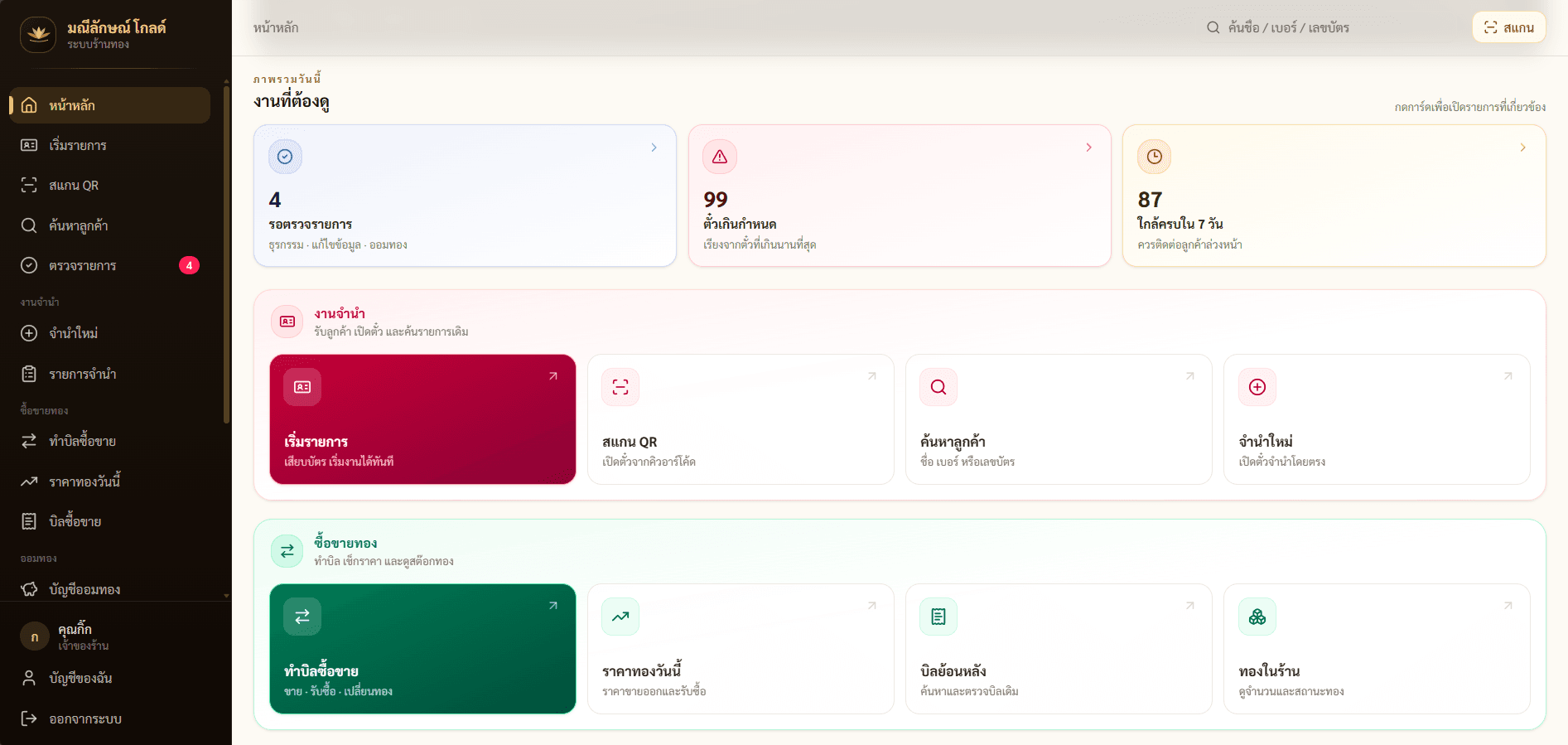
Redeemable sale versus pawn, and why the system must understand both
Legally, a pawn hands over property as security for a debt, and running a pawn business needs a pawnshop licence, so most gold shops work as redeemable sales instead: the customer sells the gold to the shop with the right to buy it back within an agreed time, paying the agreed fee or interest. The words get mixed at the counter, but the system has to record what the shop's paperwork actually says.
What a good redeemable-sale system for gold must do
One ticket lives for months and passes through several pairs of hands, so the system has to keep every event of that ticket in one place.
- Issues tickets with the gold's details, weight, valuation, due date and customer details
- Calculates interest automatically from rate and elapsed time, the way the shop actually charges
- Records every renewal with a receipt, and handles full or partial redemption
- Flags tickets coming due and overdue, and finds a ticket by name, phone or number
- Keeps gold held on redeemable sale clearly separate from the gold the shop has for sale
- Every entry carries who and when, and changing history requires the right permission
How it works in Maneelak Gold's system
Before the system, the shop kept redeemable-sale records, interest and gold stock in separate books that were hard to audit. We designed one system on one set of data, with owner and staff permissions kept apart, an approval step on key entries, and staff logins locked outside shop hours. It runs at the counter every day on desktop and phone, and a second shop's version is now being built.
Gold savings: another job that belongs in the same system
Gold savings lets a customer deposit money with the shop over time until there is enough to take real gold. The system opens the book, records every deposit, bonus and withdrawal so the balance is always right, and lets both shop and customer see it. In Maneelak's system the savings book carries a QR the customer scans to see the balance, and redeeming for gold takes that piece out of stock in the same entry. Savings sit alongside trading and redeemable sales, so one customer's full history is in one place.